
The Port of Esbjerg, in collaboration with ECOncrete, is utilizing sediment from port dredging for next-generation port infrastructure, to build coastal resilience while creating habitat for a healthy marine ecosystem.
Clay from the dredging of the Port of Esbjerg is used in the concrete mix for Coastalock armor units. At the same time, the development of marine biodiversity is enhanced by adding ECOncrete’s additive to the concrete, to optimize the conditions for marine life to settle and develop. By replacing a significant portion of the cement in the concrete mix, the Port is lowering the carbon footprint of the project and establishing a new circular pathway to build future Port infrastructure. This is the first time ECOncrete technology has been combined with the direct reuse of clay.
Installation Of First Units Completed
The first Coastalock units were recently installed at Nordsøkaj in the Port of Esbjerg. Going forward, ECOncrete will be monitoring how underwater life develops on and around the structures, collecting data and reporting on improvement.
In the next phase hundreds of units will be deployed to become an integral part of the port’s infrastructure.
“When we can combine port infrastructure and coastal protection with a healthier marine environment by utilizing sediment from maintenance and dredging in the fairway and the port, there is potential that extends far beyond Esbjerg,” says Dennis Jul Pedersen, Director of the Port of Esbjerg.
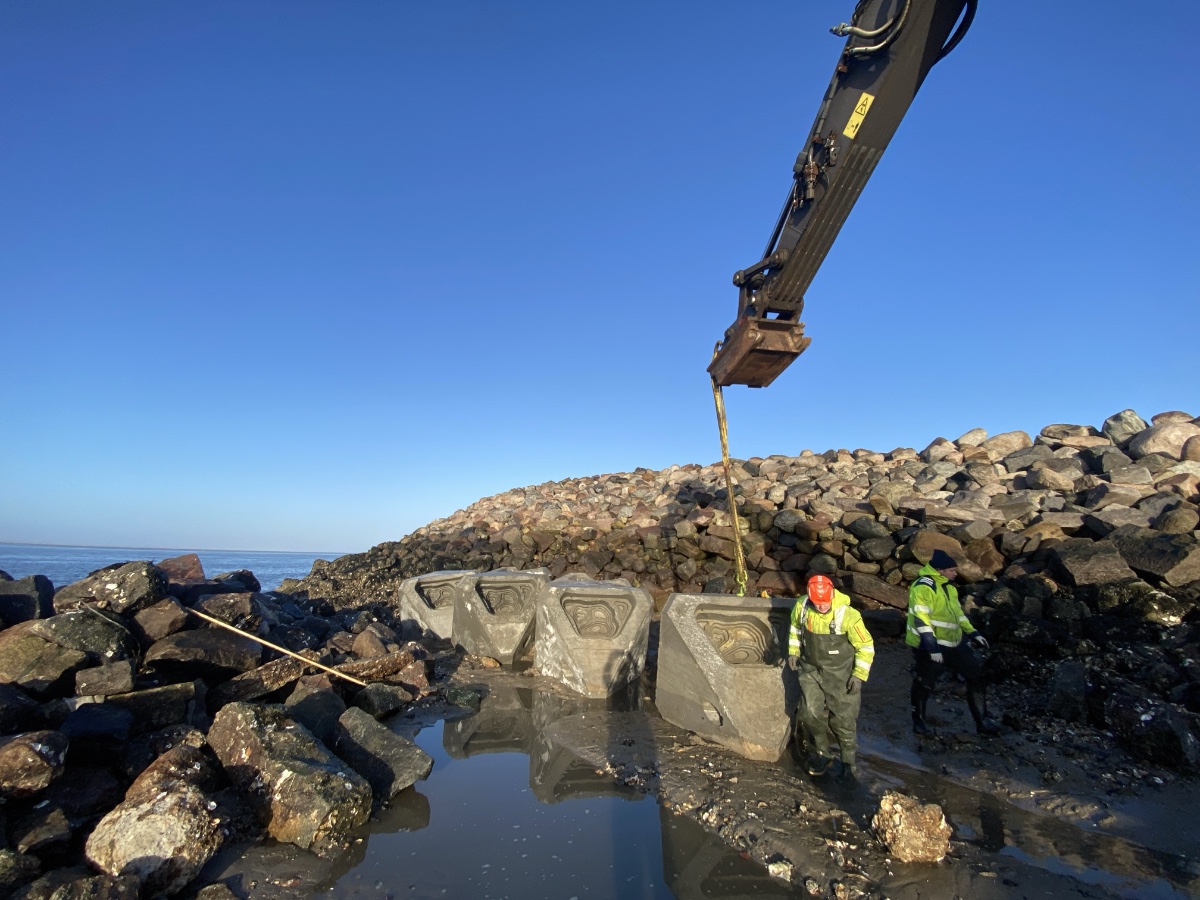
ECOncrete provides both the design and the bio-enhancing additive for the concrete mix, while the Port of Esbjerg handles the casting with local supply chain and workforce and supplies the clay to be mixed in.
“Coastal protection and port infrastructure require robust structures with high durability and stability. We have helped customers worldwide develop solutions that also promote biodiversity. In Esbjerg, this is the first time we are utilizing dredged sediment from the harbor directly in the construction. This supports our mission to promote and restore biodiversity through the development of nature-inclusive marine infrastructure,” says Philippe LeBlanc, Business Development Director at ECOncrete.
This project demonstrates how innovative material design, engineering, and ecology can come together to deliver scalable, nature-inclusive marine infrastructure. Delivering multiple benefits from circularity and CO₂ reduction to coastal protection and biodiversity enhancement.
Download Press Release (Danish): Cirkulær kystsikring i Esbjerg skal både beskytte havnen og øge biodiversiteten (PDF)